How to use public spend data to find your next deal
Public spend data shows more than past purchases. Read POs, contracts, and co-op history as a renewal calendar for every government and education account.

A public purchase record can tell you more than what an agency bought last year. Read the dates and terms together, and you can uncover a promising outreach window before the next RFP appears.
TL;DR: How do you use public spend data to find sales opportunities?
Use public spend data to identify incumbent vendors, understand pricing, and estimate when buyers may review a contract. Combine purchase orders and payment history with contract terms, renewal notices, budgets, and board records. Verify inferred dates and purchasing authority with the buyer, then prioritize accounts with a clear need, available funding, and an upcoming decision.
Map where public spend data lives
Many sellers start at USAspending.gov, which is the wrong stop for most local deals. The site tracks federal awards, so purchases that cities, school districts, and universities make from their own budgets don’t appear there.
Teams selling to local government, K–12, and higher education pull public spend data from three other places:
- State and local open checkbook portals, where many states and larger cities publish vendor payments by date and department
- Board meeting packets, where school boards and city councils list the payments and contracts they approve
- Public records requests, often the only way to get the full contract behind a payment
Every source has gaps. A purchase order (PO) may omit the full contract terms, and vendor names vary across portals, so one company can show up as three.
Stitching these sources together by hand breaks down fast, because public records requests can take weeks or months to return. Reps can’t rank accounts they can’t see.
That’s one of the reasons we’ve built Starbridge.
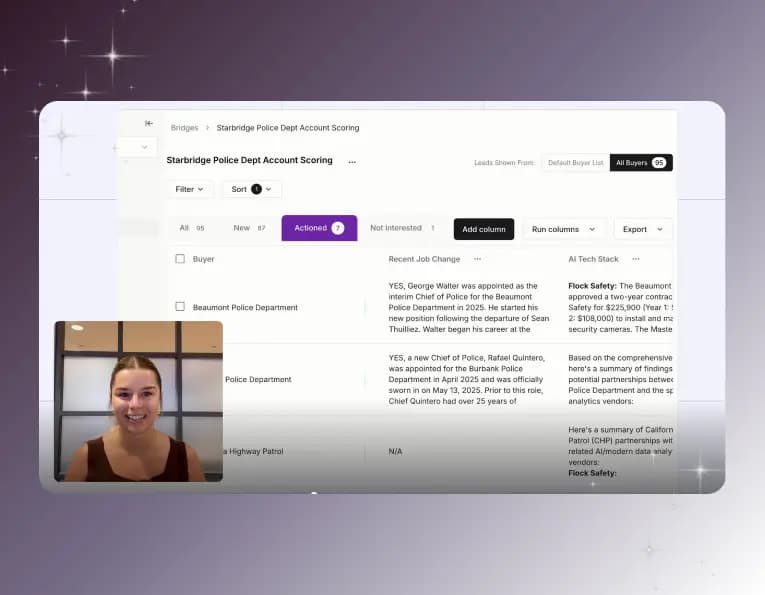
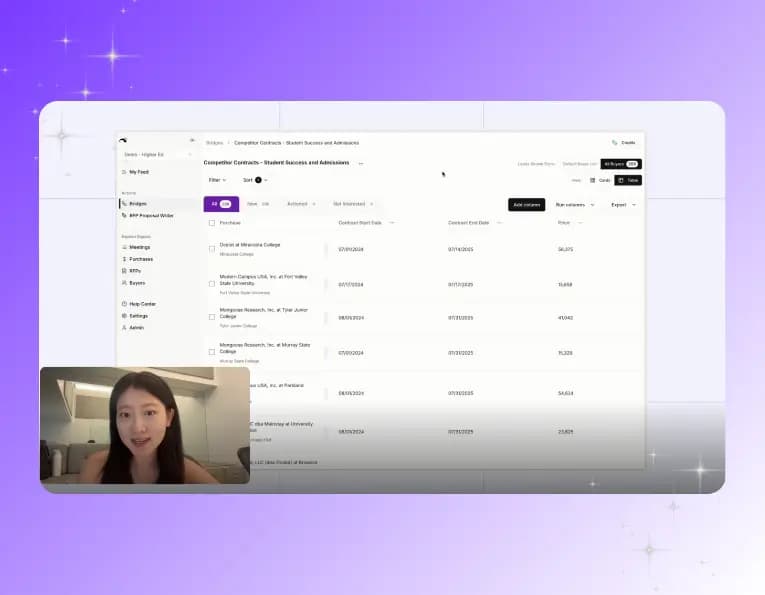
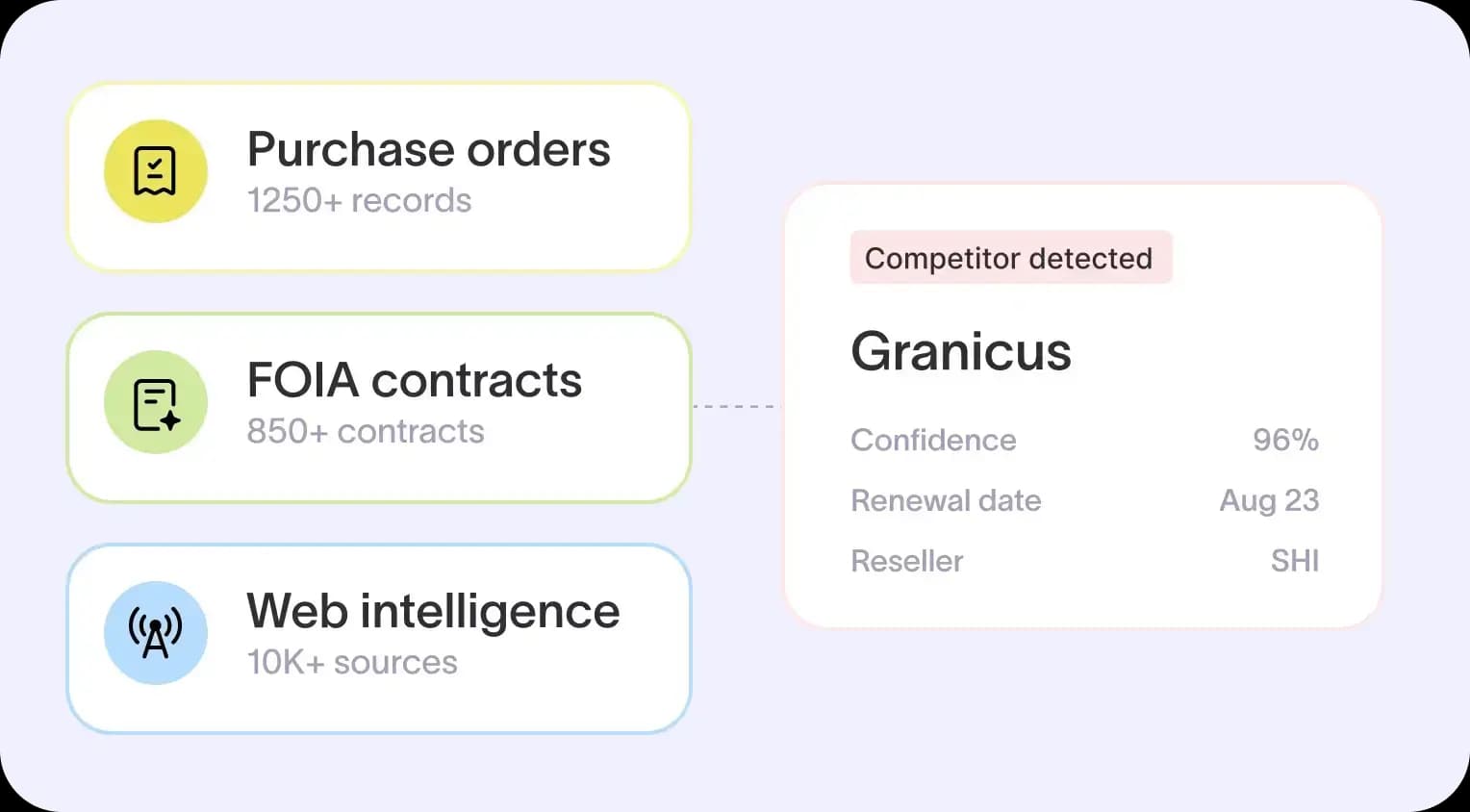
Starbridge is the AI GTM platform for companies selling to local government, K–12, and higher education. Its Public Spend Intelligence puts each account’s purchase orders and FOIA-sourced contracts in one place, with purchase order data for 77% of institutions out of the box, so reps can rank accounts by renewal timing.
Abnormal AI replaced scattered manual research across board minutes and procurement records with Starbridge, and its reps now save 10+ hours a week. Book a demo today to learn more.
Find your next deal in the dates and terms
Several record types help estimate a buyer’s next decision.
Purchase orders show what a buyer ordered, payment records show what was paid, contracts show end dates and renewal terms, and sole-source or co-op history suggests purchasing paths to verify.
Read purchase and payment history as a renewal calendar
You can infer a renewal window even when no contract is on file.
Combine the first payment date and recurring payment pattern with any available term information. Treat an assumed contract length as a hypothesis, since terms vary.
Say a district has paid the same vendor every July since July 2022. If the contract began July 1, 2022, a 3-year term would have ended in June 2025, a 4-year term in June 2026, and a 5-year term in June 2027. Payments in July 2025 and July 2026 could reflect a renewal, a longer deal, or separate annual orders.
June 2027 is one possible date to check, not a confirmed expiration.
The pattern works because of how buyers budget. Annual payments in the same month may reflect a subscription anniversary or a fiscal-year payment cycle. The payment date alone does not establish the renewal date.
Confirm any inferred window against a contract or board approval before you build a campaign around it. A PO may include a service period, but it may not show all renewal options or amendments.
Pull contract end dates and opt-out clauses
A full contract and its amendments can show details missing from a PO: the end date, renewal options, and opt-out terms. Those details help establish when the buyer can reconsider the incumbent.
Many multi-year contracts run as a base term plus optional renewal years. Check whether each renewal requires an affirmative decision or happens automatically unless notice is given. Termination clauses have their own conditions and notice periods, so use the applicable deadline to plan outreach.
Pricing in a competitor contract matters just as much. Per-seat or per-student pricing gives you a benchmark for your discovery call and a reference point to test against the current scope, volume, and terms.
Getting that context usually means a records request and a long wait.
Starbridge’s Public Spend Intelligence surfaces full competitor contracts with pricing, opt-out clauses, and expiration dates, so reps get the context without the queue.
Check sole-source and cooperative purchase history
Procurement rules generally require competition above applicable thresholds, unless an authorized exception or cooperative purchasing route applies. The rule protects public funds by requiring buyers to compare vendors for large purchases.
Thresholds vary by state and buyer type.
NASPO’s state-by-state compilation distinguishes thresholds by purchase type and procurement method, so check the rules that apply to the specific buyer and purchase.
Past sole-source awards and co-op purchases in your category identify routes to investigate, not automatic authority for the next purchase. If a district bought a similar tool off a cooperative contract last year, its procurement office already knows that path.
Cooperative contracts shorten the path because the competition already happened. A lead purchasing entity runs one competitive solicitation and awards a master agreement. Eligible buyers can then purchase under that agreement when applicable law, contract scope, and participation requirements allow.
Starbridge shows each buyer’s sole-source limits and cooperative purchasing history, so reps can see which path an account already uses.
Purchase history also matters once you win.
Even after a buyer picks you, a new, full RFP or a slow legacy reseller can stall the deal for months.
Starbridge’s Contract Vehicle Access moves a won deal onto a vehicle the buyer already uses, such as NASPO ValuePoint, OMNIA Partners, or Sourcewell.
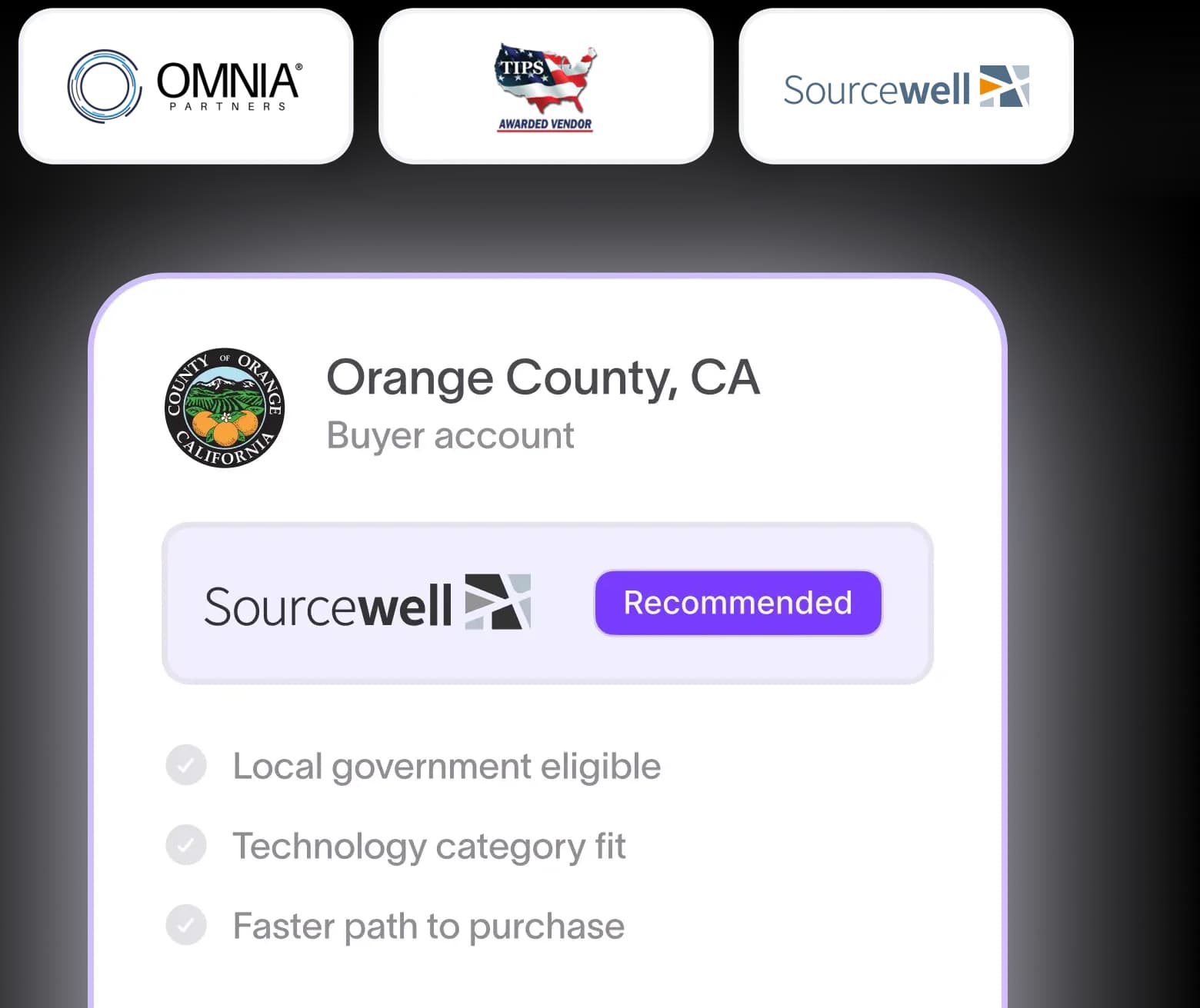
It’s included in the platform and free to get started, and Starbridge handles the compliance, paperwork, and renewals on the path to a signed contract. Book a demo today to learn more.
Score your TAM by buying readiness first
Ranking accounts by geography or size misses ready buyers, because a renewal date predicts a purchase better than account size.
A small district with a contract ending next year should outrank a large district that just signed a 5-year deal.
Start by slicing public spend data by category code, vendor, and buyer to build a target list of accounts already buying in your category.
Filter that list by verified contract terms and notice deadlines. Use payment patterns to flag accounts for further research when those terms are missing.
Then stack buying signals on top. Buying signals are early signs that a school district, university, or city plans to spend, such as a new grant or a contract about to expire.
A specific, approved budget line item is one of the clearest buying signals, because the money is already allocated. Board discussions, grants, and leadership changes can offer earlier openings. Published bids show explicit purchase intent but leave less time to influence requirements.
Use a scoring framework that leads with readiness:
| Scoring attribute | What to look for | What it tells you |
|---|---|---|
| Competitor contract expirations | Verified incumbent contract end or renewal decision within 12 months | A potential decision is approaching. Check notice deadlines and renewal options. |
| Competitor presence | A competitor in your category with a contract that isn’t expiring soon | A use case exists, but you need a value-add entry point. |
| Budget trends | A specific line item or new funding in the relevant department | Potential funding exists. Confirm availability and eligible uses. |
| Population or enrollment | Account size relative to your typical deal | How big the deal could be, as supporting context. |
Firmographics size the deal, but they can’t show timing on their own. That’s why population and enrollment sit last.
Reading board minutes by hand for every account doesn’t scale across a full TAM, and a ranked list goes stale the week after you build it.
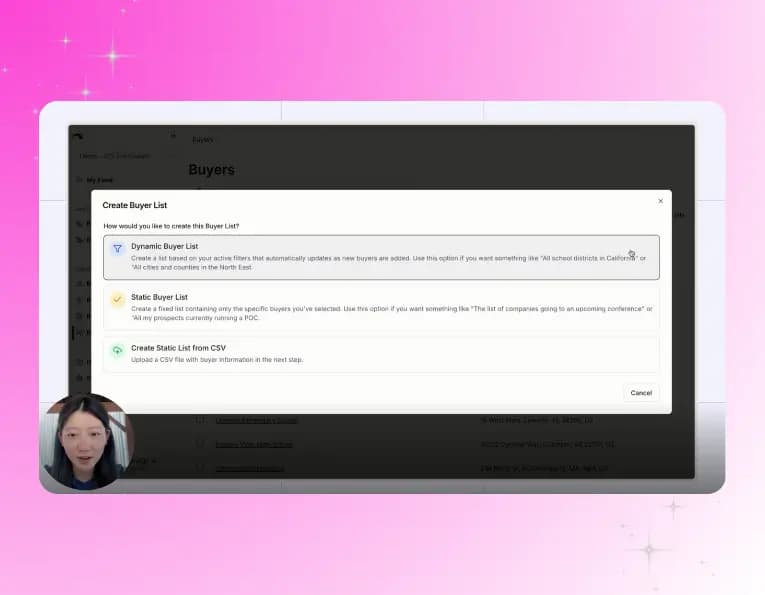
Starbridge’s Buying Signal Monitor surfaces new buying signals across 320k+ entities and uses dynamic account scoring to rank accounts by propensity to buy, so the list moves as accounts change.
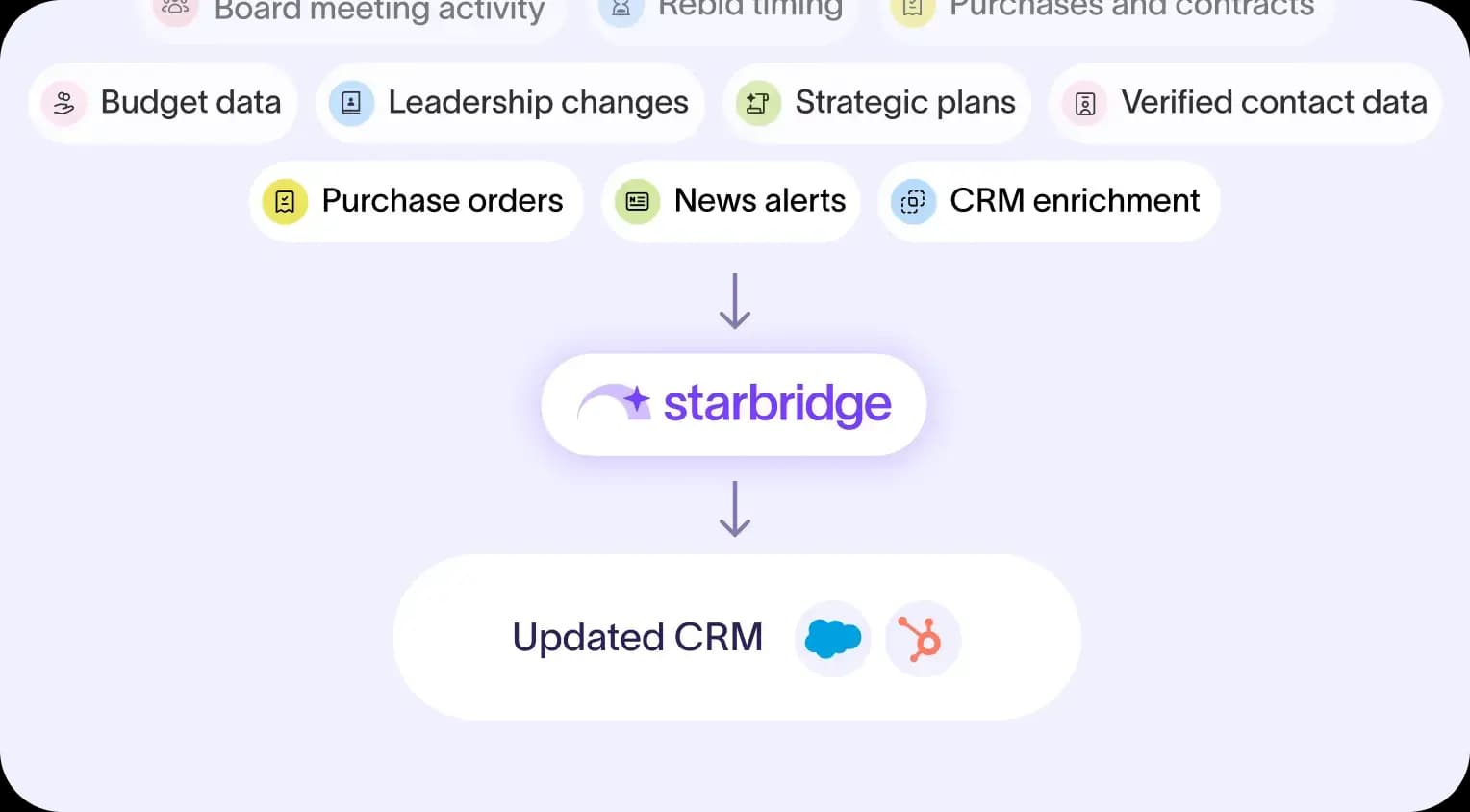
For InquirED, moving off manual board-document research and onto signal-driven scoring led to $200K in new pipeline in its first quarter. Book a demo today to learn more.
Plan outreach around the renewal and budget calendar
Sellers who wait for the RFP often learn about an expiring contract too late, after the buyer has already talked to vendors.
Public sector buyers consult vendors early to learn what’s possible, and the vendor who educates the buyer shapes the evaluation criteria.
We recommend 9 to 12 months before expiration as an outreach planning window, then adjusting for the buyer’s process and contract notice deadlines.
Agencies plan replacement procurements well in advance, and Maryland’s procurement manual offers planning guidelines of 12 to 18 months for an RFP and 9 to 12 months for a multi-step bid, rather than a universal renewal-evaluation schedule.
Use that window to learn when the buyer builds its budget and reviews the incumbent’s performance. Start relationships while the incumbent is still in place, and work backward from the buyer’s actual decision dates.
Fiscal years set the clock: NASBO data shows 46 states start the fiscal year July 1, but school district fiscal years vary by state.
So for a June 30 renewal, confirm when the relevant budget is drafted and adopted rather than assuming a January-to-March planning cycle.
Back-plan from the end date and any earlier notice deadline. For a contract ending June 30, 2028, an illustrative outreach plan is:
- Make first contact in July 2027, 12 months out, with something useful for the buyer’s planning.
- Send value-add touches, such as benchmarks or peer examples, during the buyer’s confirmed budget-planning cycle.
- Hold a procurement-path conversation before the budget is adopted, so the buyer knows how to purchase from you.
Tracking every expiration by hand often fails across an entire TAM, because end dates sit in contracts, POs, and board approvals, and those records change across thousands of accounts.
That’s one of the reasons we’ve built Starbridge.
The Buying Signal Monitor tracks contract expirations and alerts reps as a tracked contract nears its end date. Each alert names a verified contact and explains why the timing is right.
One of GovWell’s most effective plays is tracking incumbent vendors and renewal timelines, which lets its team reach agencies before an RFP is published.
In its first week on Starbridge, GovWell booked five meetings from those signals and now sources 15% of its pipeline directly from Starbridge.
Turn public spend data into a renewal calendar
Start with your 10 highest-priority accounts. Review their purchase and payment history, check contracts for expiration dates and renewal terms, and identify when each buyer might reconsider its current vendor. If contract dates aren’t available, use payment patterns to estimate a possible renewal window, then verify it with the buyer.
You can do this manually for a handful of accounts. Tracking an entire territory and keeping that information current is much harder.
That’s where Starbridge comes in.
Starbridge is the AI GTM platform built on the most comprehensive dataset of government and education buyers and buying signals. It helps companies selling to local government, K–12, and higher education identify upcoming purchasing decisions, prioritize accounts, and reach buyers before the competition.
Book a demo to see how Starbridge helps turn public spend data into timely sales opportunities.
Frequently asked questions
Public spend data records what local government, K–12, and higher education buyers purchase. It includes purchase orders, contracts, and board-approved payments. Public agencies disclose many of these records under state public records laws, subject to exemptions and request procedures.
Make first contact about 12 months before the end date. Treat 9 to 12 months as a planning window, then confirm the buyer’s evaluation schedule, budget calendar, and any earlier notice deadline. Reaching out early gives you time to build the relationship before the budget locks.
Check the buyer’s history for sole-source awards and cooperative contract purchases in your category. Either one shows the buyer has purchased without running a full RFP, but procurement must confirm that the same authority applies to your purchase. Deal size matters too, since purchases under the state or local competition threshold may not need formal bidding.
USAspending.gov tracks federal awards, so purchases that cities, districts, and universities fund from their own budgets don’t appear there. The site can show federal grants a local buyer received, which can hint at a funded project. For most local deals, open checkbook portals, board packets, and public records requests are better sources.