How to time outreach after a government leadership change
A new superintendent or city manager resets vendor reviews. When to reach out, from the board vote through the first 180 days, and what to say each time.

A new superintendent or city manager can change the direction of a deal before your team notices. The opportunity lies in matching your outreach to the transition, the leader’s priorities, and the buyer’s actual purchasing calendar.
TL;DR: When to reach out after a government leadership change
Start at the public announcement by updating contacts, mapping interim leaders, and checking existing commitments. Offer useful context early, then request a conversation when the new leader states a relevant priority. Treat 30, 90, and 180 days as planning checkpoints. Follow a departing champion’s new account while protecting the relationship they leave behind.
Know which leadership change play you are running
A buying signal is an early sign that an account plans to spend, such as a new grant or a contract about to expire.
A leadership change can be a useful signal because priorities and purchasing influence may shift, even when contracts and approval rules stay in place.
Often, there are two types of plays after job changes:
Play one is a new leader at a target account. A new director, department head, or superintendent may review existing vendors, but the mandate and timing depend on the role and the account. A transition can prompt vendor reviews, so reach out early with something relevant to the new role and save the pitch for later.
Play two starts when a known champion leaves an account, so flag both sides of the move. Outreach to the champion’s new account is the warmest cold outreach a rep will ever send. The champion already knows the product and can back it again.
However, the account the champion left is the second half of play two. That departure creates a renewal risk and a relationship gap, and account managers usually learn about it too late.
A key contact changing roles is also an important data signal for the CRM. Outdated contacts create dead ends.
Spot the change before the new leader’s start date
Leadership changes often appear in public records before professional profiles are updated.
That’s why we recommend watching these sources first:
- Board agendas and minutes, council votes, and superintendent search announcements
- Election results and press releases
- Job postings and agency or district websites
Boards may approve hires before the start date, but the lead time and start date vary. Confirm the appointment, effective date, and any interim arrangement in the official announcement.
Checking thousands of district and city websites by hand takes hours per week and still misses changes buried in board PDFs. Teams that rely on manual checks can miss the announcement and lose time to prepare.
That’s one of the reasons we’ve built Starbridge.
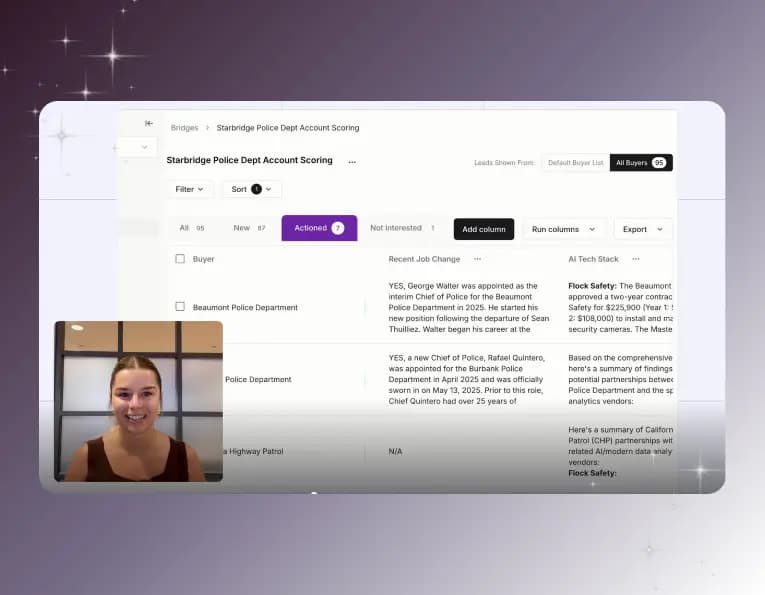
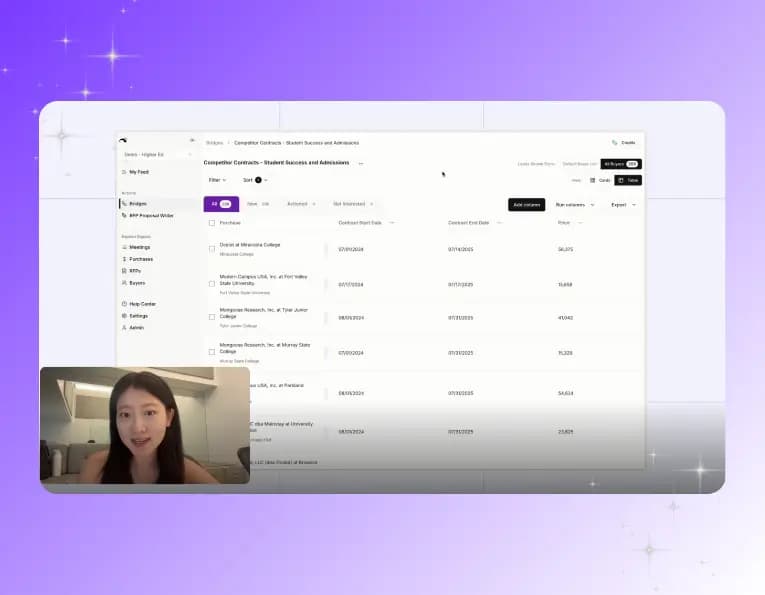
Starbridge’s Buying Signals Monitor helps teams act on early buying intent by tracking 320k+ entities 24/7 across board minutes, strategic plans, and job postings.
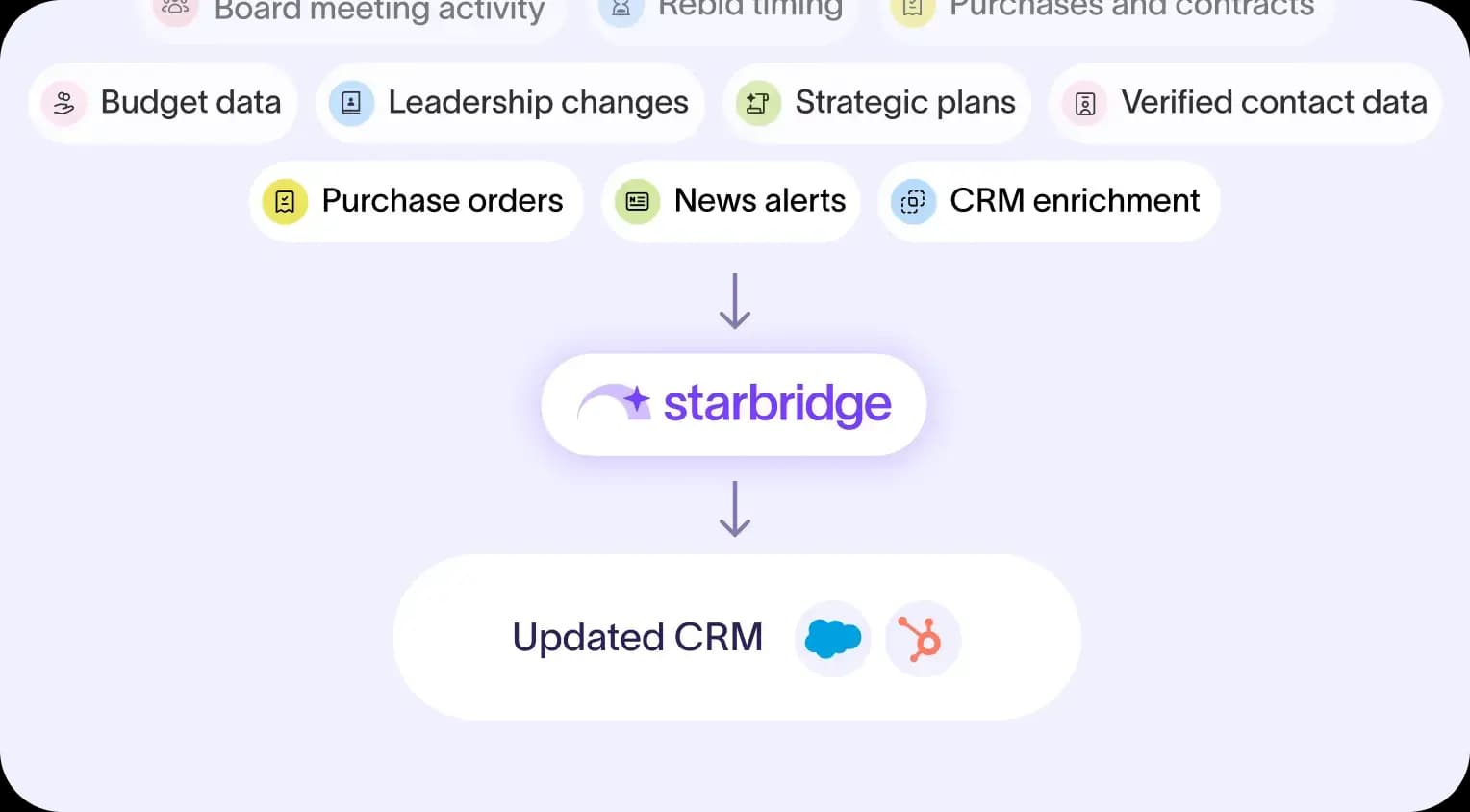
The monitor also covers budgets, grants, contract expirations and job changes.
Frontline Education saw a 90% cut in research time. A task that took 2 hours now takes 5 minutes. Book a demo today to learn more.
Time outreach after a government leadership change with a 30/90/180-day plan
Each stage of a leadership transition requires a different approach, so outreach should change with it.
We recommend using 30, 90, and 180 days as planning checkpoints, not a universal purchasing schedule. Map them to the leader’s actual start date, entry plan, fiscal year, and board calendar.
At the announcement and during the interim period
Start preparing at the public announcement, board vote, or council approval. Count the 30/90/180-day checkpoints from the leader’s actual first day.
Update CRM records when the change is announced and map the interim leader and carryover cabinet. Pause any sequence still aimed at the outgoing leader, since emails to a departed superintendent waste sends and drag down deliverability.
Treat the interim leader as a stabilizer and a separate audience. Confirm the interim leader’s mandate and authority, then lead with support for work already underway.
This timeline only works if each alert reaches a rep with a contact and something to say.
Starbridge turns insight into execution by pairing every Buying Signals Monitor alert with a verified contact, a reason for outreach, and AI-generated copy.
Alerts push to Salesforce and HubSpot, and Starbridge also sends them to Apollo and Outreach.
The first 30 days, or the listening tour
We don’t recommend a day 1 sales email.
A new leader spends the first month learning the organization, meeting the board, and setting a first-year agenda. A demo request in week one competes with a full inbox of congratulations and loses.
Send a short, specific note about the role instead. If a carryover staff member already uses your product, ask for a warm introduction. A referral from an active user carries more weight than any cold note.
Then listen. Track listening-tour themes, early board remarks, and the entry plan posted on the district or city website. Those sources reveal emerging priorities, though the timetable varies by leader.
Days 60 to 90, as priorities emerge
Around days 60 to 90, check whether the incoming leader has turned listening-tour findings into stated priorities. Purchasing decisions may come earlier or later.
Request a meeting tied to one stated priority, and bring evidence from a comparable district or city. Government and education buyers trust what worked for a peer more than any feature list.
New superintendents, CIOs, and department heads may initiate vendor reviews in year one. Buyers in a new seat aren’t experts in every solution, so they consult vendors early to learn what’s possible.
The vendor who educates the buyer in this window helps shape the evaluation criteria before any RFP exists.
Around 180 days, check the budget cycle
At the six-month checkpoint, confirm where the buyer is in its budget cycle.
Budget workshops and adoption dates do not necessarily align with a leader’s tenure. Confirm the budget, the procurement path, and who signs off.
The B2G sales cycle can continue for months after the economic buyer says yes, depending on funding, procurement, and approval requirements. A yes at day 180 still needs a procurement plan.
The table below sums up the full timeline:
| Stage | Goal | Primary contact | Recommended action |
|---|---|---|---|
| At the announcement | Prepare the account before day one | Interim leader and carryover cabinet | Update CRM records and pause sequences to the outgoing leader |
| First 30 days | Earn attention without pitching | Incoming leader | Send a short note tied to the new role |
| Days 60 to 90 | Shape priorities and evaluation criteria | Incoming leader and IT | Request a meeting tied to one stated priority |
| Around 180 days | Turn priorities into budget | Economic buyer and procurement | Confirm budget, procurement path, and stakeholders |
Attach the table to every leadership change alert so each rep knows which stage the account is in.
Reach the right person while the seat changes hands
A transition reshuffles the stakeholder map, so work it in tiers.
- Tier one is carryover staff and the interim leader.
- Tier two is the incoming leader.
- Tier three covers the board, end users, and IT.
The order shifts by role, since a new superintendent resets cabinet priorities and a new city manager reshuffles department budgets. A new CIO redraws the technology roadmap, and IT may influence or approve technical requirements while procurement and other officials retain their own approval roles.
Match the channel to the relationship. Carryover champions get a warm introduction, and new leaders get a short email followed by a call with the same hook. Save in-person meetings for board-adjacent events.
An outgoing leader or carryover staff member can introduce a vendor to the successor. Keep that handoff light, because the successor still needs room to build their own relationships.
Generic databases that still list the previous leader waste rep time and hurt sequence performance.
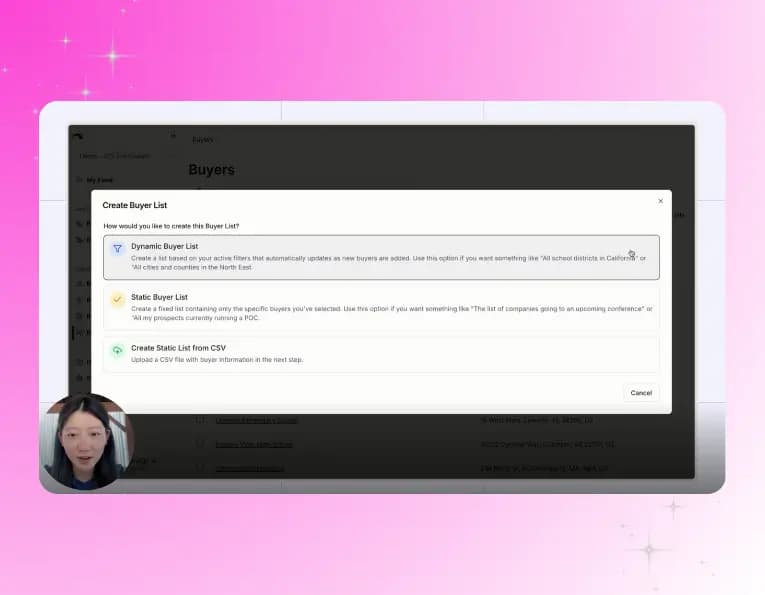
Starbridge’s Contacts & Company Data helps teams engage the right contacts with verified records from official government and school sites. Waterfall enrichment and continuous bounce checks keep those records current.
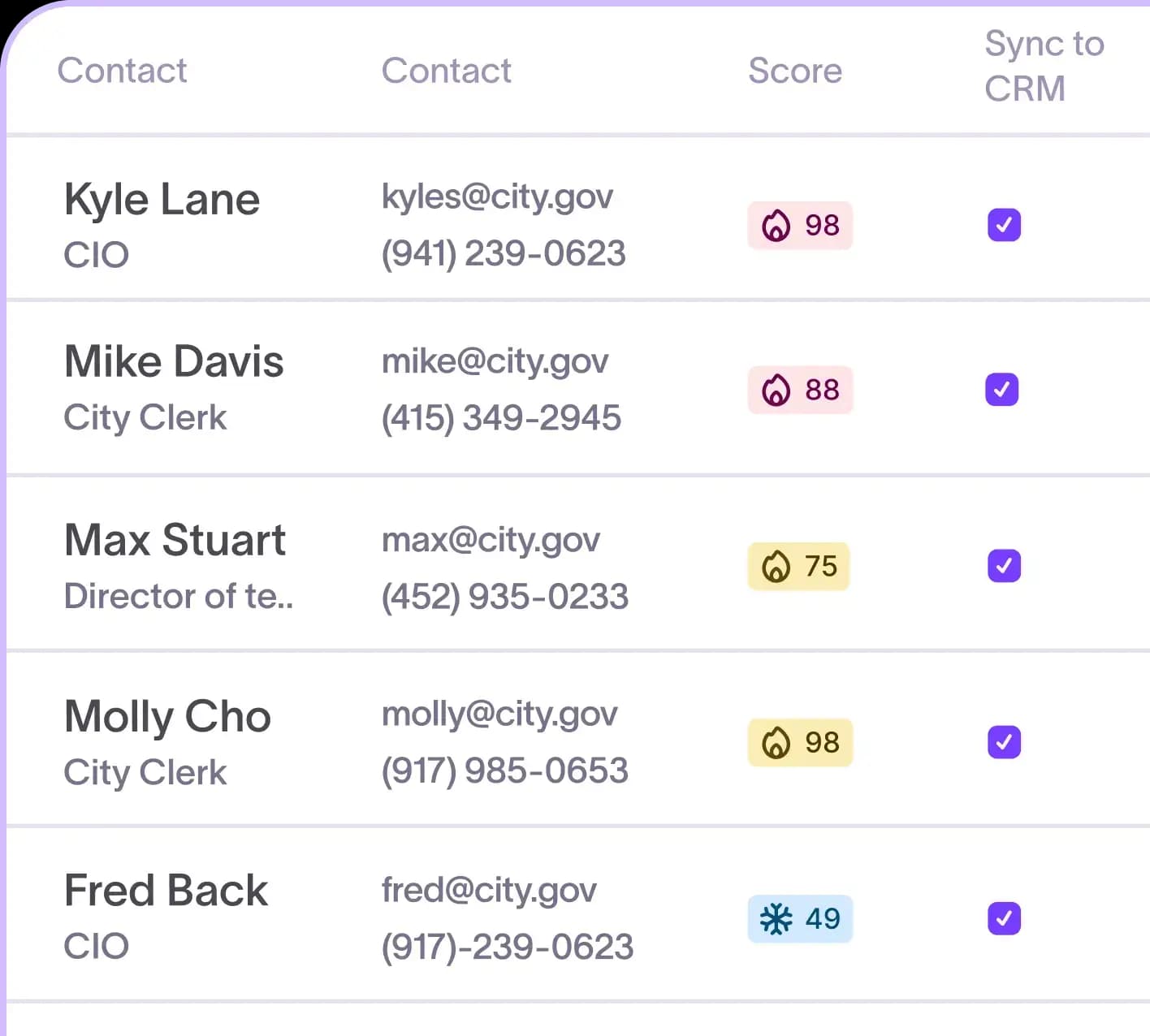
A bi-directional CRM sync then syncs, cleans, and enriches the records in Salesforce and HubSpot. Starbridge’s proprietary web-agent technology delivers 98% contact accuracy, and a 14,000-email test measured a 2% bounce rate.
TAM to Target reports Starbridge contact data is 3–4x more valid than other vendors it has used. Book a demo today to learn more.
Write a first message that goes beyond congratulations
Research the new leader before writing a word. Review priorities and vendor choices at the leader’s previous district or agency, then read current board discussions and the strategic plan.
The problem? Pulling that history by hand can take hours per leader.
Starbridge’s Ask Starbridge Chat helps reps get critical context instantly, answering natural-language questions about any account in the app or in Slack.
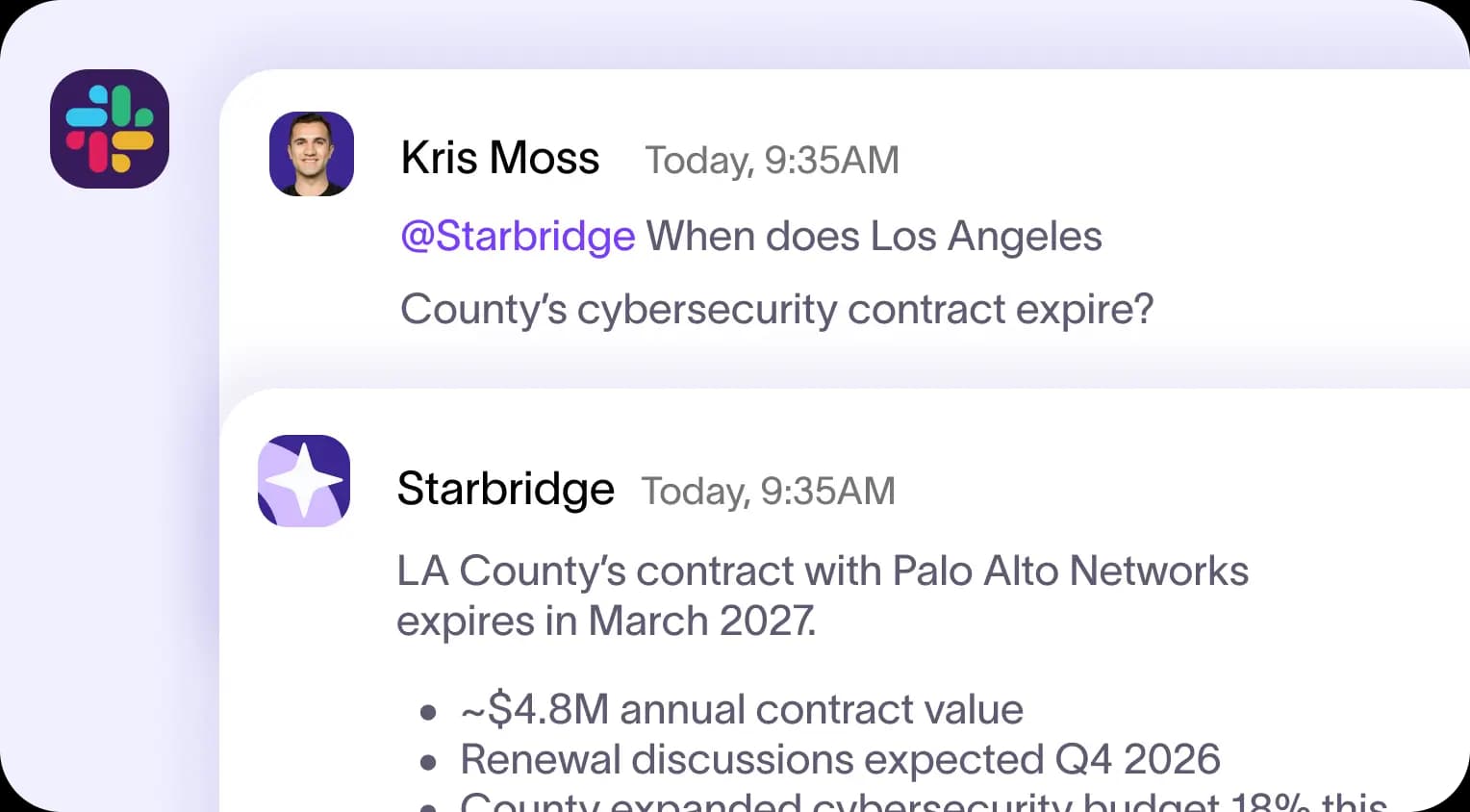
Zencity reps pull city priorities from recent council meetings in seconds, and the team now sources 50% of its cold meetings from Starbridge.
Keep the message simple. Name what is changing, explain why it matters to the new leader, and offer a light next step.
Here are a few example openers, each tied to a board priority or a stated agenda:
- “Your board spent real time on chronic absenteeism last month. A neighboring district tackled the same issue, and I’d be glad to share what worked.”
- “Your entry plan names family engagement as a first-year goal. Would a one-page summary of how two peer districts approached it help?”
- “The council’s budget workshop flagged permitting backlogs. I’d be happy to share how a peer city shortened its review queue.”
The best hooks often live in board meeting recordings, which general AI tools like ChatGPT and Claude can’t index. Starbridge’s meeting intelligence in Buying Signals Monitor processes those recordings and transcripts, so reps catch buying intent in the buyer’s own words.
Act on leadership changes before day one
A new leader can create an opening for new business, while a departing champion can put an existing deal at risk. The key is spotting these changes early and timing outreach to the transition, the leader’s emerging priorities, and the buyer’s budget calendar.
The challenge is finding those changes before the new leader starts. Announcements are often buried in board minutes, job postings, and public records across thousands of government and education accounts.
That’s where Starbridge comes in.
Starbridge is the AI GTM platform built on the most comprehensive dataset of government and education buyers and buying signals. Its Buying Signals Monitor tracks leadership changes across local government, K–12, and higher education, alerting reps with verified contacts and context for outreach.
That way, your team can build relationships with incoming leaders, follow departing champions, and protect existing accounts.
Book a demo to see how Starbridge helps your team identify leadership changes early and turn them into sales opportunities.
Frequently asked questions
Start when the change is publicly confirmed by updating records and mapping the interim team. Follow with a brief, relevant note in the first 30 days. Use days 60 to 90 as a checkpoint to request a meeting if a relevant priority has emerged.
Reach out to both, with different goals. The interim keeps open projects moving and can unblock work already underway. The permanent hire helps set the long-term agenda, so use 30/90/180-day checkpoints alongside the actual budget and procurement calendar.
Not every leadership change ends in an RFP. A new leader’s vendor review can end in a renewal, an authorized sole-source or cooperative purchase, or a formal solicitation. Early vendor education can inform requirements, but it does not replace the buyer’s procurement process.
Flag the departure the day it’s announced and line up a new sponsor among carryover staff. Re-sell value to the incoming leader early and watch board minutes for signs of a shorter renewal. Then follow the champion to the new account, where they can back the product again.
Manual tracking across thousands of websites and board PDFs doesn’t scale, so changes slip past until the start date. Starbridge’s Buying Signals Monitor catches those changes early by watching board minutes, job postings, and other public records around the clock. The monitor flags new leaders and champion moves as they appear and rescores affected accounts.