How to build relationships with government buyers before the RFP
Government buyers name the problem long before they publish an RFP. How to be useful in each window, from the first board discussion to the procurement path.

Government buyers often reveal the problem they need to solve before they publish an RFP. The opportunity is to become useful while buyers are still deciding what a good solution should look like.
TL;DR: How to build government buyer relationships before an RFP
Build relationships before an RFP by researching public priorities, mapping decision-makers, and sharing relevant and helpful information. Match outreach to confirmed buying signals, budget dates, and contract milestones. Offer education and useful RFI responses, confirm the purchasing path with procurement, and follow the buyer’s ethics and communication rules.
Know what government and education buyers need from a vendor
Government and education buyers are rarely experts in the solution they need.
For example, a curriculum director or a city IT lead consults vendors early to learn what’s possible. A vendor who provides useful information can help the buyer clarify evaluation criteria.
The buyer’s job gets easier when a vendor hands over proof that holds up in a board meeting.
Pre-solicitation education, RFI responses, and informational meetings are legitimate ways to engage. Keep gifts and meals out of the sales approach, and avoid drafting procurement specifications.
Ethics rules differ by state, city, and district, so check the local rules before any outreach.
Here’s a quick reference for the team:
Do
- Share peer case studies tied to a stated priority
- Answer RFIs with specific, useful detail
- Offer informational meetings through the buyer’s approved process
- Reference public board discussions by date and topic
Avoid
- Giving gifts, meals, or event tickets to buyers
- Drafting specifications or scoring criteria for the buyer
- Contacting evaluators after the quiet period starts
- Offering anything that could read as a favor
Map the people who shape the purchase
Purchases in government and education often involve multiple decision-makers.
This means a rep with a single contact has one ally in a room full of evaluators. Coverage across roles needs to exist before the budget is set, because the approved budget can constrain the scope.
Here’s who typically sits on that committee in each segment:
| Role | K–12 | City or county | Higher education |
|---|---|---|---|
| End user | Teacher | Analyst or case worker | Faculty or advising staff |
| Economic buyer | Superintendent | Department head | Dean |
| IT decision-maker | CTO | CIO | CIO or CSO |
| Procurement | Purchasing director | Procurement officer | Purchasing office |
Please keep in mind that IT is often a core decision-maker or co-signer in government and education. That’s why we recommend treating the CTO or CIO as a decision-maker from the first conversation.
The source of the contact data matters as much as the research. Official district and city websites, staff directories, and board rosters are useful starting points.
Stale contacts cost more than a bounced email. Reps waste hours chasing people who left the role. Bounces lower deliverability scores, which weakens the performance of every sequence that follows.
Starbridge Contacts & Company Data fixes the sourcing problem at the root. The data holds 98% email accuracy over a 14,000-email test, with a 2% bounce rate.
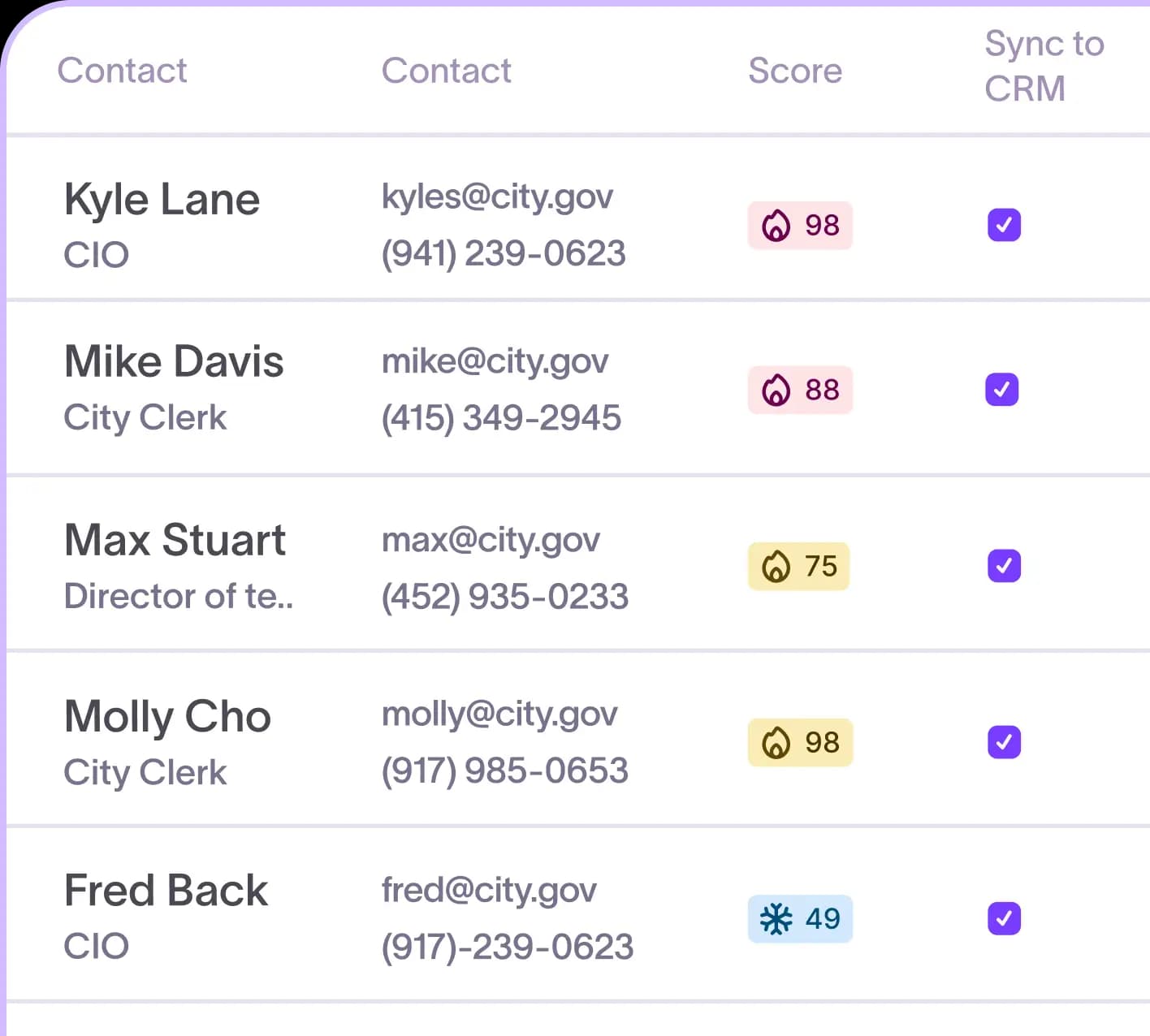
That accuracy comes from Starbridge’s proprietary web-agent technology, which crawls government and school websites directly. Starbridge then enriches each contact through a waterfall of 8 providers and bounce-checks it on a recurring basis.
Manual verification before each campaign is a step TAM to Target dropped once Starbridge data proved 3–4x more valid than other vendors it had used. Book a demo today to learn more.
A timeline to build relationships with government buyers pre-RFP
A buying signal is an early sign an account plans to spend, such as a new grant, a budget line item, or an expiring contract.
Buying signals can surface well before a solicitation.
In general, the buyer moves through different ‘evaluation windows’ before the RFP drops, and each window calls for a different kind of help.
Please be mindful that the 6- to 18-month windows below are planning examples, so confirm each buyer’s actual project and budget calendar.
12 to 18 months out, when the problem first goes public
Board minutes and strategic plans can name an issue before a specific purchase is funded.
For example, a district might discuss chronic absenteeism for several meetings before anyone drafts a line item.
These discussions matter to different parts of your team:
- For new business, they show which accounts have a live initiative your outreach can align with.
- For current customers, the same discussions can flag renewal risk or an opening to expand.
At this stage, the right move is education.
Send a peer case study, a relevant policy brief, or a short note that references the board discussion. Here’s a sample note tied to a hypothetical district’s March board meeting:
I saw that your board spent part of its March meeting on chronic absenteeism and the push for earlier family outreach. A nearby district worked through the same issue last year, and I’m happy to send a two-page summary of what it tried.Notice it doesn’t include a calendar link. The ask for a meeting can wait until the buyer has a reason to want one.
6 to 12 months out, when budget takes shape
Draft budget line items, grant awards, and job postings show an account building capacity. A new line item for attendance software is a budget forming in public.
Leadership changes create two separate plays:
- In the first, a new director or department head starts at a target account. New leaders often review vendors within their first year, so reach them early, before new priorities harden.
- In the second play, a champion leaves an account, and you flag both accounts. The old account now carries risk and needs a new sponsor. The new account is an opportunity, since the champion can advocate for you again.
A champion’s move is also a data problem, because the old CRM record now points to a dead end.
We recommend using this window for discovery conversations, stakeholder mapping, and introductions to end users. Ask what success would look like and who else needs to weigh in.
0 to 6 months out, as procurement takes shape
At this point, the buyer is drafting requirements and solicitation documents.
Useful help from a vendor looks like a thoughtful RFI response, references from similar entities, and a direct question about the procurement path.
Please keep in mind that an RFP may trigger a blackout or quiet period with restrictions on vendor communications. The start date, covered contacts, and permitted channels vary, so follow the solicitation and the entity’s procurement policy.
Tracking all the above engagement windows across a full territory by hand doesn’t scale.
A rep would need to read every board packet, budget draft, and job posting in hundreds of accounts. Opportunities then surface too late, and a competitor is already in the room.
That’s one of the reasons we’ve built Starbridge.
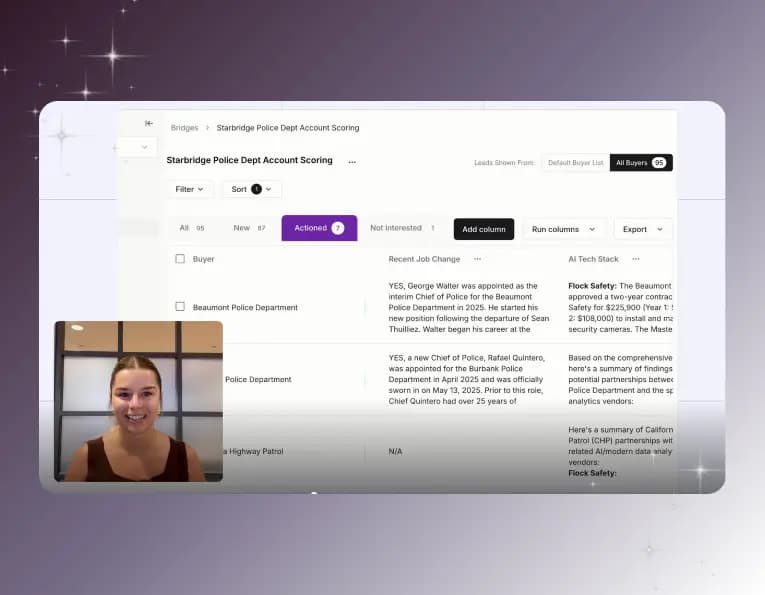
Starbridge’s Buying Signals Monitor helps teams act on early buying intent across an entire territory. The monitor tracks 320k+ entities for meeting discussions, leadership changes, and grants. It also watches budgets, contract expirations, and bids.
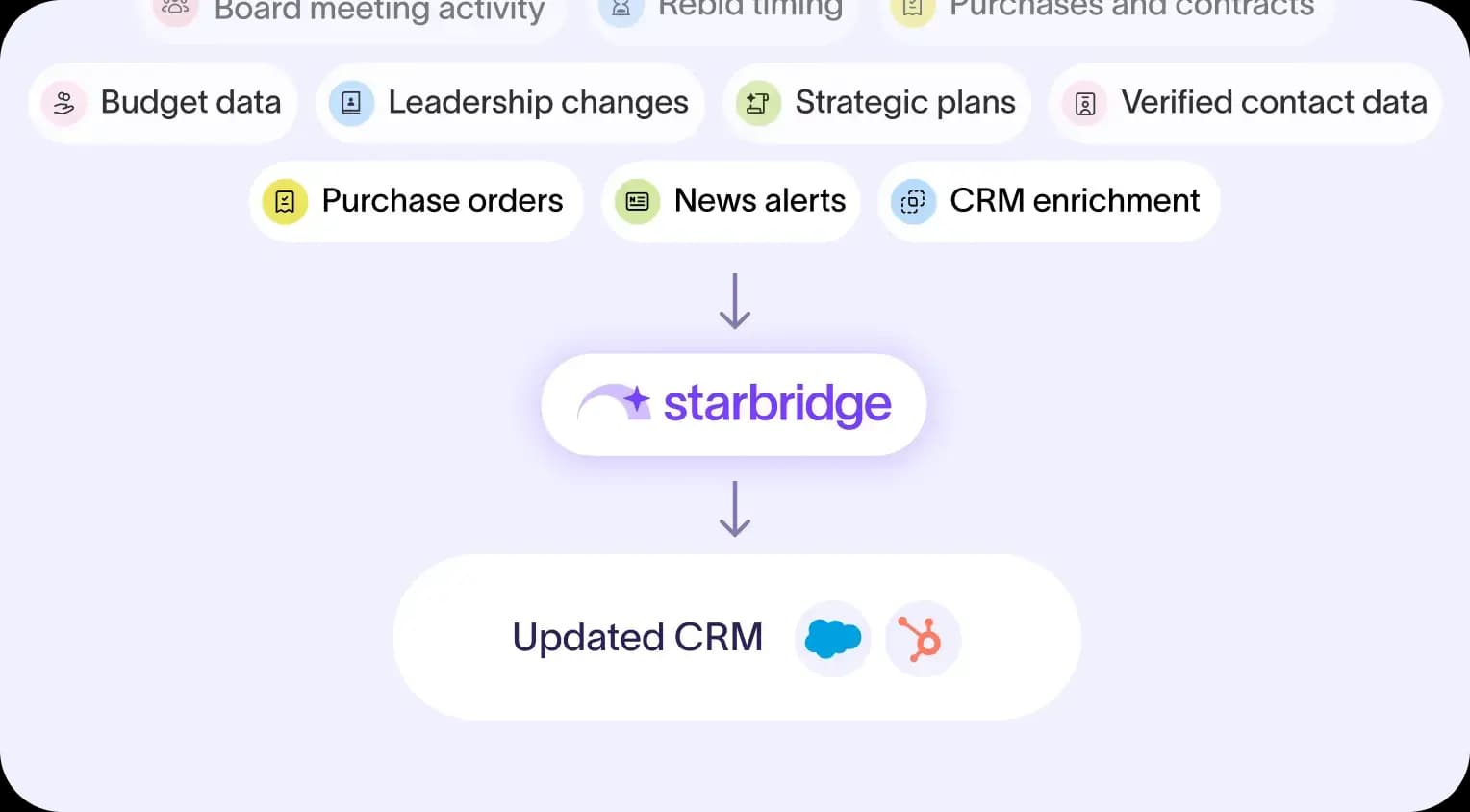
Alerts arrive in real time. Each buying signal comes with a verified contact, a reason for outreach, and AI-generated outreach copy.
In its first week, GovWell booked 5 meetings by acting on those buying signals. GovWell sells a permitting and licensing platform to municipalities, so its reps track meeting agendas that mention permitting in their territory.
Starbridge now sources 15% of GovWell’s qualified pipeline. Book a demo today to discover how Starbridge could work for your company.
Make the purchase easier to justify
Government and education buyers often follow their peers. A board approves a purchase more easily when a similar nearby district or city already made it.
Proof from a similar nearby account is the strongest relationship asset a rep can bring.
Here are several ways to add value before the RFP:
- Peer references from similar entities the board will recognize
- Budget-request help with ROI data the finance office can check
- Thoughtful RFI responses that show the committee what’s possible
- Informational meetings or demos arranged through approved channels
A free pilot is not automatically a shortcut. Whether paid or free, it needs committed users, clear success criteria, and any required procurement approval.
A small paid pilot may be appropriate when the buyer can authorize it. Set clear success criteria, a timeline, and a decision date before the pilot starts.
Events add face time between those steps. Build your conference strategy around events that economic buyers attend. If you attend without a booth, follow the organizer’s networking and solicitation rules. Many events prohibit suitcasing, or unauthorized selling by non-exhibitors.
The best handout at those events is an account-specific one-pager. Quote the buyer’s own strategic plan and reference a nearby customer win. Use the buyer’s logo only with permission and without implying endorsement. The buyer sees the homework before you say a word.
LinkedIn works as a supporting channel between meetings. Share useful public insight there, such as a takeaway from a state budget hearing.
Know the incumbent and the path to a contract
Knowing the current vendor, current spend, and contract end date changes when to start a relationship. Contract lengths and renewal options vary. For complex replacements, a 12- to 18-month planning horizon before contract expirations can be a useful starting point.
Confirm when renewal evaluation actually starts, including any earlier notice deadline.
Use a 9- to 12-month outreach window as a planning guide, then adjust to the buyer’s process while the incumbent is still in place.
Finding that context by hand means digging through board approvals and public records, then filing requests under the applicable state public records law. That’s weeks of work per account, which doesn’t scale past a handful of targets.
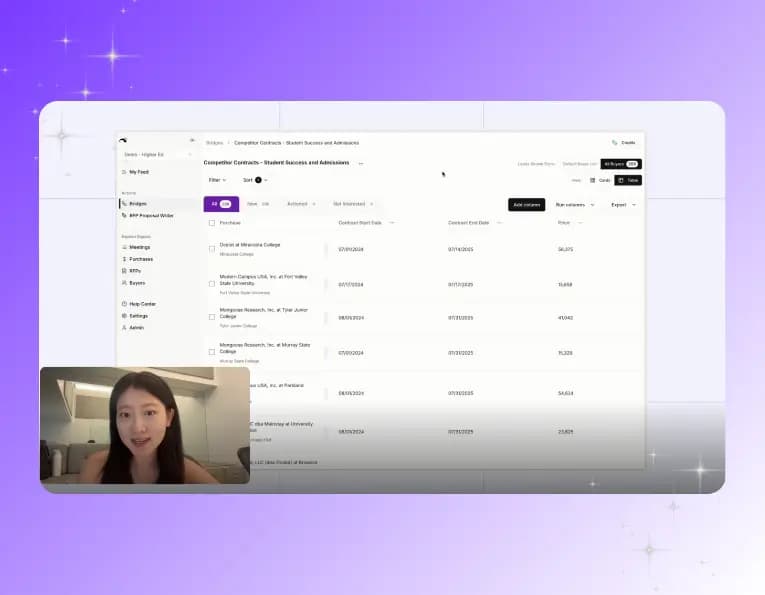
Starbridge’s Public Spend Intelligence gets reps that critical context instantly. Reps see full competitor contracts with pricing, opt-out clauses, and expiration dates. Purchase orders and FOIA-sourced vendor proposals fill in the rest.
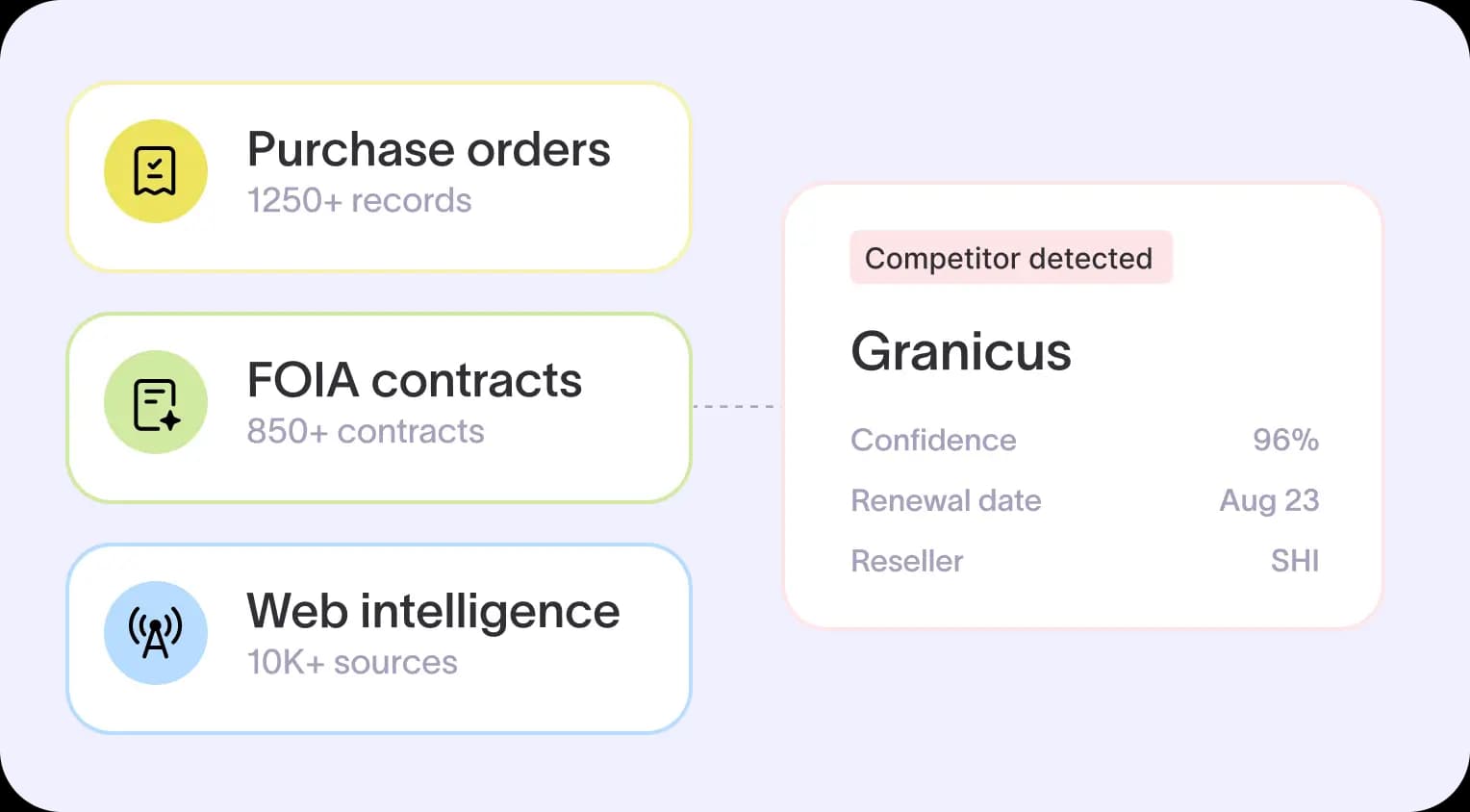
Frontline Education cut research time by 90% with Starbridge. Frontline’s Director of Revenue Intelligence said research that once took 2 hours now takes 5 minutes. The sales team now walks into calls knowing each buyer’s purchasing context, priorities, and competitor context.
The incumbent is half the picture. The other half is how the account plans to buy, because triggering a new, full RFP adds months to the sales cycle.
Small-purchase procedures may allow purchases without a new, full RFP, but thresholds and quote requirements vary by buyer, purchase type, and funding source. Sole-source awards require a separate authorized justification.
Cooperative purchasing vehicles such as NASPO ValuePoint, OMNIA Partners, and Sourcewell offer another route. These vehicles can let eligible buyers use an existing competitively awarded contract when applicable law, contract scope, and participation requirements allow. Ask about the procurement path early in every relationship.
Contract Vehicle Access is available as part of the Starbridge platform.
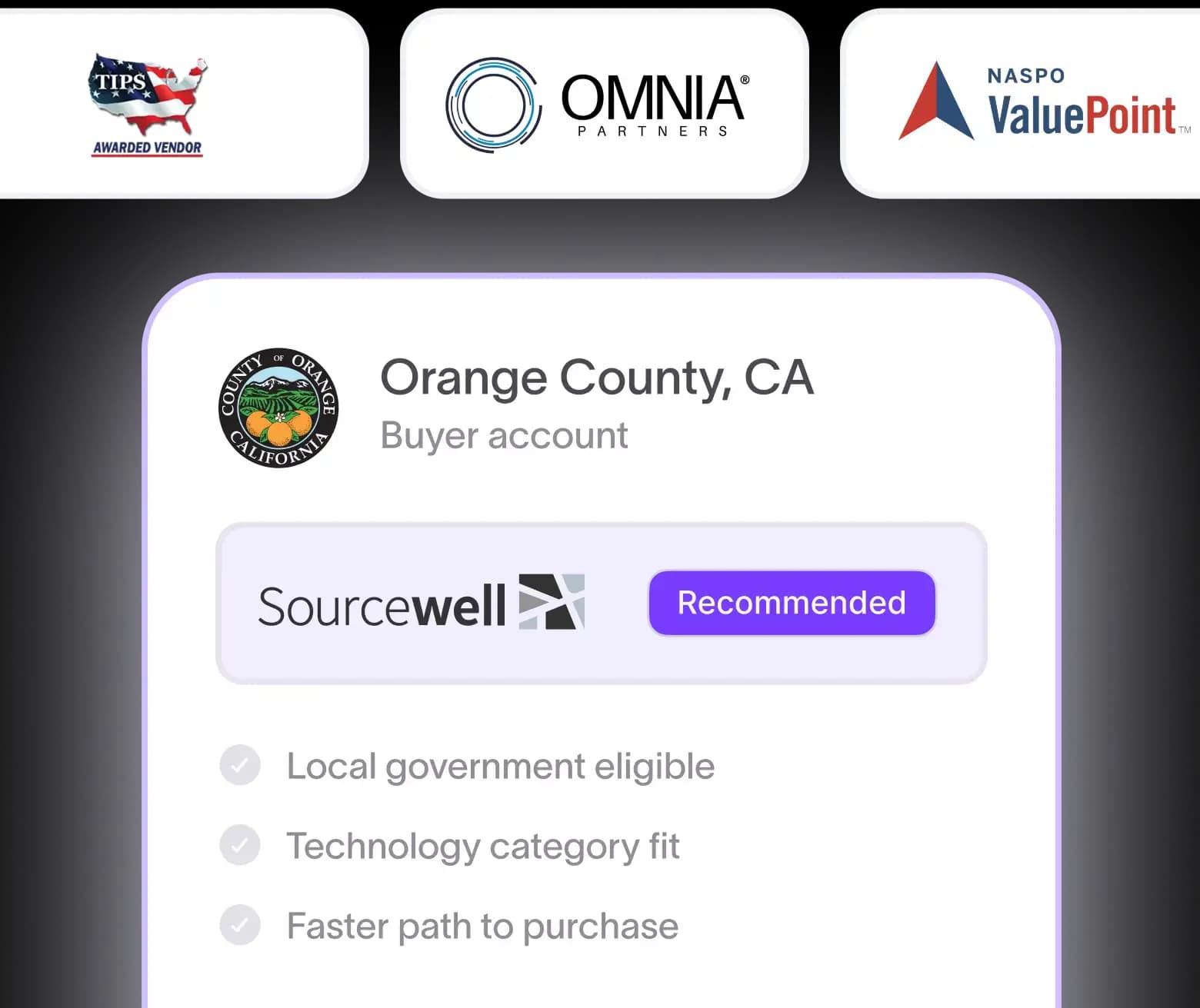
When a buyer is ready, the deal moves onto a vehicle the buyer already uses. Starbridge provides that access directly and handles the compliance, paperwork, and renewals. Book a demo today to learn more.
Keep relationships warm across a long cycle
Sales cycles can continue for months after the economic buyer says yes, depending on funding, procurement, and approval requirements.
A long relationship needs a steady cadence of touchpoints.
We recommend planning one touchpoint a month, each tied to a new reason for outreach.
Good reasons include a fresh board discussion, a grant award, or a peer win. Retire “just checking in.” That phrase has never helped a buyer justify a purchase.
A lean team can run the same five-step workflow every week:
- Spot a buying signal in a target account
- Find the verified contact who owns the problem
- Write the reason for outreach in one line
- Send a short, useful note
- Log a follow-up task in the CRM
Starbridge’s bi-directional Salesforce and HubSpot integrations sync, clean, and enrich records, so that workflow lives in the CRM. Daily digests deliver prioritized accounts to each rep, which turns insight into execution.
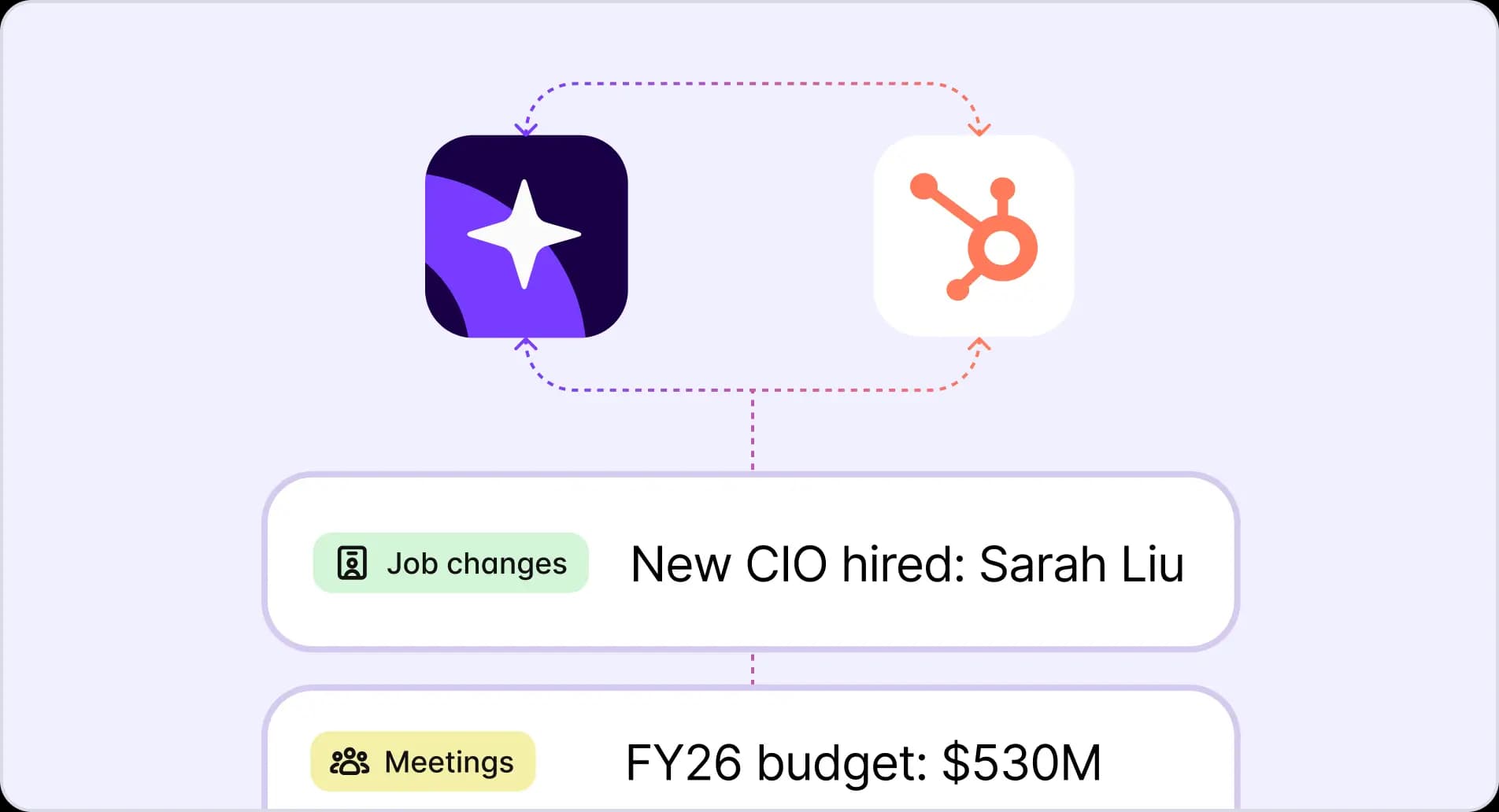
Prioritize accounts by buying readiness first. Contract expirations, budget trends, and grant funding are the strongest indicators. Competitor usage and job changes belong on that list too.
Firmographics like enrollment, population, and operating budget add useful context, though they fall short on their own. A large district with no budget for your category is still a long shot.
InquirED generated $200,000 in new pipeline in its first quarter by replacing manual board-document research with buying-signal-based account scoring. The scoring showed InquirED which districts were ready to buy.
The relationship continues past the award. Deliver on implementation, because the next reference depends on it. Track champion job changes so a departure never catches the account team off guard.
A current customer’s new RFP in your category is a cue to review the requirements and your renewal plan. Raise questions through the solicitation’s authorized channels and follow its submission rules.
Be the vendor the board can say yes to
Relationships with government and education buyers are earned by making the purchase easier to defend, timed to what each account already discussed in public. Pick ten priority accounts, find one public buying signal for each, and send one useful note this week.
Ten accounts is a manageable start. The hard part is doing it every week across an entire TAM, when the signals are scattered across thousands of board packets, budget drafts, and job postings.
That’s the work Starbridge takes off a rep’s plate.
Starbridge is the AI GTM platform built on the most comprehensive dataset of government and education buyers and buying signals, so teams selling to local government, K–12, and higher education see which accounts are ready, who to contact, and what to say before the competition does.
Book a demo to see how relationships timed to buying signals help teams win more deals.
Frequently asked questions
Start when a relevant buying signal appears. A 12- to 18-month horizon can help with complex purchases, but verify the buyer’s actual timetable. Early outreach should educate, through a peer case study or a note on a board discussion. Discovery conversations and requirements input come later, as the budget takes shape.
Yes. Pre-solicitation education, RFI responses, and informational meetings are standard practice before a solicitation is issued. Keep gifts and meals out of the sales approach, avoid drafting procurement specifications, and check the applicable ethics and procurement rules.
A quiet period, also called a blackout period, restricts communications about a procurement. Its start date, covered contacts, and exceptions vary by entity. Follow the solicitation’s designated channels and the applicable procurement policy.
Yes. Authorized small-purchase procedures, justified sole-source awards, or eligible cooperative purchases may avoid a full RFP. Confirm the rules for the specific purchase with procurement. Examples of cooperative programs include NASPO ValuePoint, OMNIA Partners, and Sourcewell.
Start with end users and the economic buyer, such as a superintendent or department head. Add IT early, since IT is often a decision-maker or co-signer. Bring in the procurement officer to confirm the buying path.